Why Mississippi River Is Important?
Learn why Mississippi River is important for transportation, agriculture, and ecology. Explore its significance in depth.
Author:Kelly HayesReviewer:Celeste PearlMar 23, 20244.1K Shares159.9K Views
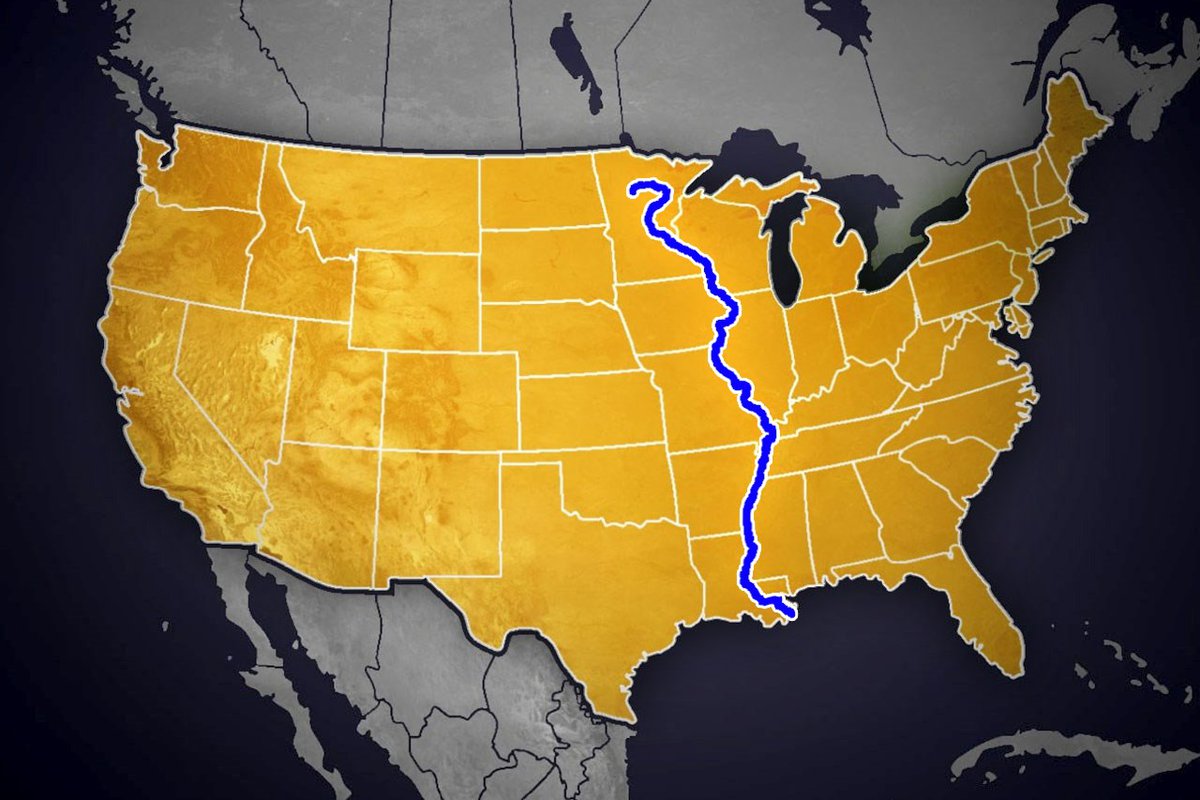
Given its size, range of habitats, and biological output, that's why mississippi river is important. It is also one of the most crucial trade lines in the world and a significant path for birds and fish moving through North America.
The Native Americans who lived along the river used it to get food and get around. European travelers in the past used the Mississippi to see what would become the United States' core and northern parts. Along the river, fur traders did business, and soldiers from several countries stationed troops at critical spots along the river when the area was still a border.
In the 1600s, white people from Europe and the U.S. (often with enslaved people) came on steamboats and took Native American lands, turning them into farms and towns. The Mississippi River now powers a big part of the economy in the upper Midwest.
The upper Mississippi has 29 locks and dams that move about 175 million tons of freight every year. Barges and their tows dothis. It's also a great place for boaters, canoeists, hunters, fishermen, and birdwatchers to have fun, and it has a lot of outdoor activities.
The Backstory
The Lower Mississippi is home to the Choctaw, Chickasaw, Quapaw, Osage, Caddo, Natchez, and Tunica. The Upper Mississippi is home to the Sioux, Sac and Fox, Ojibwe, Pottawatomie, Illini, Menominee, and Winnebago. These groups have lived along the Mississippi since at least 4000 BCE. The river provided a way to get around, clean water, and freshwater fish and mussels.
In the 1600s, French explorers Louis Jolliet and Jacques Marquette went south down the Mississippi. This was after Spanish traveler Hernando de Soto found it in 1541. Europeans also moved there because of the many riches.
After that, countries raced to settle along the river, which led to growth and conflict. Before the Louisiana Purchase in 1803, Britain, Spain, and France all claimed land along the Mississippi River. After the U.S. won the War of 1812, the Mississippi River was theirs forever.
During and after the Industrial Revolution, the river was changed to make it easier to navigate and lessen the damage from flooding. This helped the country grow. After the storm of 1927, the federal government started building levees, digging, and dikes. More than 2,000miles of the Mississippi watershed have been walled off to control the river and keep it from flooding the lowlands.
The assortment of backwaters, marshes, and sloughs that used to cover seasonal floodplain ecosystems were emptied and cut off from the river. This destroyed habitat and put at risk the many fish and species that live in the Mississippi River. The area is essential for more than 300 possible rare, threatened, or endangered species.
Early Settlement And Exploration
As its Indian name suggests, the Mississippi was important to the people who lived along its banks. The river Native Americans used the Mississippi as a way to get around and to store food. They used willow dugouts and bark boats to paddle on it and catch the fish they ate every day.
Both small-scale and large-scale movements shaped tribal languages and cultures. The Sioux had moved west from the upper river by the time the Europeans arrived, making room for the Ojibwa, Ho-Chunk, Fox, and Sauk. Downriver, Illinois, tribes lived in wealthy farming communities. Alibamu, Chickasaw, Tunica, Yazoo, Pascagoula, Natchez, Biloxi, and Choctaw were some of the groups that lived in the lower valley.
As the leader of the first European group to go to the river, Hernando de Soto planned to attack the southern Indians. In May 1541, his army reached the river south of Memphis, Tennessee.
The Spanish called it "Rio Grande," but it didn't make the newcomers very much money and caused them a lot of pain. The Mississippi River Indians were attacked many times, and the Spanish were caught off guard by the floods. In a strange twist, de Soto, the European who found the river, was buried in it, causing his defeated group to run away to sea in boats they had made themselves.
Mississippi River - Abundance Of Wildlife
In or near the Mississippi River, there are 360 kinds of fish, 326 kinds of birds, 145 kinds of animals, and 50 kinds of mammals. Let's look at the different kinds of animals that live in the Mississippi River and the land around it.
Mammals
The Mississippi River is home to many types of animals, from tiny, sneaky northern shrews to bigger, more noticeable ones like bats, otters, beavers, wolves, and white-tailed deer.
Birds
The Mississippi River has a lot of different places for birds to live, so it is a safe place for many species. The river is an essential route for birds to travel, both in the spring and the fall.
Mussels
Even though they are often overlooked, mussels are an essential part of the river's ecosystem and have unique life paths.
Fish
In the past few years, fish species have made a massive comeback after being wiped out by pollution. Because they live there, many species, like eagles, otters, herons, mussels, and more, can do well in the river!
Insects
Bugs are helpful, even though they can be annoying. They clean up after dead animals and plants, feed birds and other animals, and pollinate fields, among other things. They are essential to the Mississippi River and the land around it.
Reptiles And Amphibians
Reptiles and amphibians, especially snakes, live on both sides of the Mississippi River. They are essential to the ecosystem's balance. The northern water snake is a type of snake that lives in that river. The animal can be seen swimming along the bank of the river and hiding in the trees.
Dimensions Of Mississippi River
The Mississippi River is one of the most important and beautiful rivers in the United States. It has many features that make it unique and essential. Let's look into these aspects to learn more about this famous river.
Length
The Mississippi River is the second largest river in North America. It starts at Lake Itasca and flows 2,350 miles through the middle of the United States to the Gulf of Mexico. It is about 100 miles longer than the Missouri River, which flows into the Mississippi River. Some say that the Mississippi River is the third largest river system in the world when you add the lengths of the Missouri and Ohio Rivers to the main stem of the Mississippi.
Width
The river is only 20 to 30 feet wide at Lake Itasca, which is the smallest part of its whole length. There are 11 miles of water on either side of Lake Winnibigoshish, which is where the Mississippi is largest. Lake Pepin, where the canal is about 2 miles wide, is the most significant part of the Mississippi River's shipping passage that can be navigated.
Speed
The average speed of the water at the Mississippi River's source is about 1.2 miles per hour, which is about half as fast as a person walks. The river moves about three miles per hour through New Orleans. But the speed changes depending on where the river spreads, narrows or gets shallower or when the water level rises or falls. The water from Lake Itasca, which is where the river starts, takes about three months to get to the Gulf of Mexico.
Volume
The amount of water a river flows is another way to figure out how big it is. The Mississippi River is the 15th biggest river in the world by this measure. It sends 16,792 cubic meters (593,003 cubic feet) of water into the Gulf of Mexico every second. With a flow rate of 209,000 cubic meters (7,380,765 cubic feet) per second, the Amazon is the world's largest river by volume. It drains a jungle, and it drains a lot of the dry land between the Appalachians and the Rocky Mountains on the Mississippi.
Watershed Size
The basin of a river is the area that the river and its branches drain. This is one way to figure out how big a river is. About 40% of the entire United States is drained by the Mississippi River. This area is about 3.2 million square kilometers (1.2 million square miles), which is made up of 32 states and two Canadian provinces.
The basin of the Mississippi River is the fourth biggest in the world. It goes from the Allegheny Mountains in the east to the Rocky Mountains in the west. In comparison, the Amazon takes about 7.1 million km³, which is about 2.7 million square miles.
Why Mississippi River Is Important - The Future
Most of American Rivers' work in Mississippi is focused on repairing the Upper Mississippi River. This is where the story of the river's recovery is just starting to emerge. We're looking for ways to help connect the Mississippi River to itself again by removing the dam in Minneapolis and making changes to the levees that will help recover the ecology and river function that were lost.
We worked to get $31 million for the Upper Mississippi River Restoration Program in both 2014 and 2015. In 2015, Congress closed the Upper St. Anthony Falls Lock. If the navigation lock is closed, an 8-mile stretch of famous big river rapids through downtown Minneapolis could be fixed up.
The first step toward long-term repair is to buy out more homes in the floodplain. Next, the levees will be moved back so that the river can take up more of the floodplain. That lets silt settle more naturally and lets marshes clean up dirty water.
We are strongly opposing the U.S. Army Corps of Engineers plans to add needless and expensive new locks to a number of dams on the Upper Mississippi River system. These locks would speed up a process that is already known to be a significant cause of wetland loss along the river.
There are also still a number of projects going on to build new levees or raise old ones along the Upper Mississippi. In the 1950s, there was a fight over a planned levee in New Madrid, MO. This levee would have cut off the last piece of marshland in the area that was tied to the Mississippi River and drained an area of swamp the size of Washington, DC.
Mississippi River Economic Importance
The Mississippi River holds significant economic importance for the United States due to its role as a major transportation route, a source of fresh water for agriculture and industry, and its contribution to various economic sectors. Here are some key aspects of the Mississippi River's economic significance:
- Transportation - The Mississippi River is one of the most important waterways in the United States and plays a crucial role in the transportation of goods. It connects the central part of the country to the Gulf of Mexico, allowing for the movement of goods like grain, coal, petroleum, chemicals, and manufactured products. Barges and towboats transport these goods up and down the river, making it a cost-effective and efficient means of transport.
- Agriculture- The fertile lands along the Mississippi River and its tributaries support a significant portion of the nation's agricultural production. States like Illinois, Iowa, Missouri, Arkansas, and Louisiana rely on the river for irrigation, drainage, and transportation of agricultural products. Corn, soybeans, rice, and cotton are some of the major crops grown in this region.
- Industry- Many industries, such as manufacturing and petrochemical production, are concentrated along the Mississippi River. The availability of freshwater from the river is essential for these industries, as it is used for cooling, processing, and other industrial purposes.
- Energy- The Mississippi River also serves as a vital resource for the production of hydroelectric power. Dams and locks along the river generate electricity, which contributes to the region's energy supply.
- Tourism and Recreation- The river and its surrounding areas attract tourists and support recreational activities such as boating, fishing, and hunting. These activities generate revenue for local economies, including businesses that cater to tourists.
- Ports and Trade - Several major ports along the Mississippi River, including New Orleans, Baton Rouge, and St. Louis, facilitate international trade by handling imports and exports. These ports are gateways for goods moving to and from the United States, contributing to the nation's economy.
- Flood Control and Navigation Infrastructure - The Mississippi River is also crucial for flood control and navigation. The U.S. Army Corps of Engineers maintains a system of levees, dams, and locks to manage water levels and ensure the river remains navigable. This infrastructure helps protect communities from flooding and maintains the river's economic viability.
Overall, the Mississippi River plays a central role in the economic life of the United States, supporting agriculture, industry, transportation, energy production, tourism, and trade. Its continued importance underscores the need for responsible management and conservation to ensure its sustainability and reliability for future generations.
Why Mississippi River Is Important - FAQs
What's The Importance Of The Mississippi River?
The Mississippi River is crucial for transportation, commerce, and agriculture in the U.S., making it an economic and ecological linchpin.
Why Is The Mississippi River Economically Important?
It's economically significant due to its role in transporting goods, supporting agriculture, and generating hydropower.
What Were The Benefits Of The Mississippi River?
Benefits of the Mississippi River include flood control, supporting agriculture, and commerce.
Conclusion
The question of why mississippi river is important, extends far beyond its role as a picturesque waterway. It is the economic backbone of the heartland, supporting agriculture, industry, and commerce. Its navigability and flood control systems are essential for the safety and prosperity of millions.
The river's contribution to biodiversity, water quality, and cultural heritage is equally invaluable. As the heartland's guardian, it continues to shape the past, present, and future of the United States. Therefore, it is undeniable that the Mississippi River remains a cornerstone of America's heartland, a lifeline for the nation, and an integral part of its identity.

Kelly Hayes
Author
Kelly Hayes is a seasoned journalist with over 10 years of experience, specializing in news reporting and horoscope analysis. She holds a Bachelor's degree in Journalism from New York University, enhancing her credibility and expertise in the field.
Kelly's writing style is characterized by clarity, depth, and a commitment to delivering credible information. Her published works across various platforms showcase her knack for engaging storytelling and insightful analysis.
Readers trust Kelly's expertise in both current events and astrological interpretations, making her a sought-after authority in journalism.
Apart from her professional activities, Kelly enjoys exploring new cultures, practicing yoga, and engaging in philanthropic activities.

Celeste Pearl
Reviewer
Celeste Pearl is an accomplished writer and expert in numerology, astrology, and spirituality.
With a Bachelor of Arts in Journalism and over 6 years of writing experience, Celeste brings a wealth of expertise to her articles, making complex topics accessible and engaging for readers.
Her passion for metaphysical sciences is evident in her insightful content, where she explores the depths of these subjects with clarity and depth.
Beyond her professional pursuits, Celeste enjoys delving into spiritual practices and connecting with nature for inspiration.
Latest Articles
Popular Articles